
Is TRE™ Safe? Side Effects, Precautions and What to Expect
You’re curious about TRE™, but you want to know what the shaking can do before you try it. Here is what people usually feel, the precautions in TRE™, and how you stay in charge of the tremor.
Is TRE™ safe? For most people, yes. TRE™ (Tension and Trauma Releasing Exercises) uses the body’s own shaking reflex, and you can slow it down or stop it at any time. The usual after-effects are mild: tiredness, more energy, or feelings sitting closer to the surface for a while.
The shaking is something your body already knows
You’ve probably shaken before. After a near-miss in traffic. Before speaking in front of people. Your hands after a difficult phone call. That tremor is the body settling itself after stress.
TRE™ starts the same reflex on purpose, in a safe setting. A few simple exercises tire the leg muscles a little. Then the shaking begins on its own. If you’d like to see how this works in the body, here’s how TRE™ works.
So the shaking itself is nothing new. Your body has had this response all along.
You stay in charge of the tremor
Some people come to me after watching very dramatic TRE™ videos online. They’re afraid they’ll lose control of their body, and that something bad will happen.
This is the part that surprises people most. The shaking is your body’s response, but it isn’t out of control. From the first session you learn how to slow it down, stop it, or let it continue. In TRE™ this is called self-regulation.
How I work
In my sessions I follow one of the main ideas of TRE™: the slower, the better. And I repeat it until it’s almost boring. You’re always in control. You can stop at any time.
The shaking feels different for everyone. At the beginning it may be very gentle, or a bit more intense. It depends on your body and where it is right now.
When someone’s system is quite activated and the shaking gets intense, we take breaks. The session becomes a few shorter rounds, with pauses in between so the body can settle.
For some people it’s the other way round. I worked with one client whose body was slowly coming out of a freeze response. For a long time the shaking didn’t really start. We went slowly, until we found a place in the body that felt safe enough to let go. Then the shaking began on its own.
Short sessions are the usual start. Dr David Berceli, who developed TRE™, suggests about 15 minutes of shaking, two or three times a week. That’s also the rhythm I suggest at the beginning. Later, the rhythm can change with you.
What you might feel after a session
It depends on where your nervous system is right now.
- Some people feel tired and sleepy, often from deep relaxation.
- Others feel more energy and aliveness.
- Sometimes feelings come closer to the surface, and you may feel more open or vulnerable.
None of this means something went wrong. It’s the body letting go of what it was holding. Many people find it easier to keep the rest of the day calm after a session.
Occasionally someone feels agitated, anxious or uncomfortable afterwards. The TRE™ guidance is simple here: a short break usually helps, and then the practice continues more slowly. When something feels like too much, grounding comes first. Grounding and self-regulation are part of what we learn together in sessions.
I remember one client who had done a lot of spiritual practice, but almost no body work. The shaking was intense for him from the start, so we stopped early. For about two hours afterwards he had a headache and felt a little unsettled in his body. Then it passed. He was surprised that something as simple as shaking could have such an effect.
Can the shaking start on its own later?
It can happen, but usually not in the same way as in a session. Once you know how to start the shaking, stop it and ground yourself, a little tremor at work or in bed stops being a mystery. You know what it is. You can let it pass, or settle it and come back to it later. Knowing the process makes it much less scary.
Who should wait, or go more slowly
TRE™ waits
- During pregnancy, as a general rule. Some providers with deep experience do work with pregnant clients, so it depends on your situation. Talk with a provider first.
- With a broken bone, a sprain or recent surgery that is still under a doctor’s care.
TRE™ goes slowly and gently
- With high or low blood pressure or a heart condition, once your doctor has approved it.
- With blood sugar problems.
- With epilepsy.
- With chronic pain.
A conversation comes first
- With bipolar disorder, schizophrenia, psychosis, severe depression, borderline personality disorder or PTSD.
- With dissociative, anxiety or stress disorders, or any past mental health issue, treated or not.
- With chronic fatigue, fibromyalgia, lupus or lower back pain. These usually need a different, gentler way of working with the tremor.
- With medication on a regulated dose, or medication or herbs that cause dizziness or balance problems. Here the usual first step is a word with your doctor.
TRE™ says these conditions call for a provider with experience in them. That’s why we talk before anything else. I work with people whose condition is stable. If I see that someone needs another specialist or a different kind of therapy, I tell them and suggest where to turn. Together we look at whether TRE™ is right for you now, and how it fits with your doctor’s or therapist’s care.
Whatever your health history, we talk about it before the first session.
Learning at home, with guidance
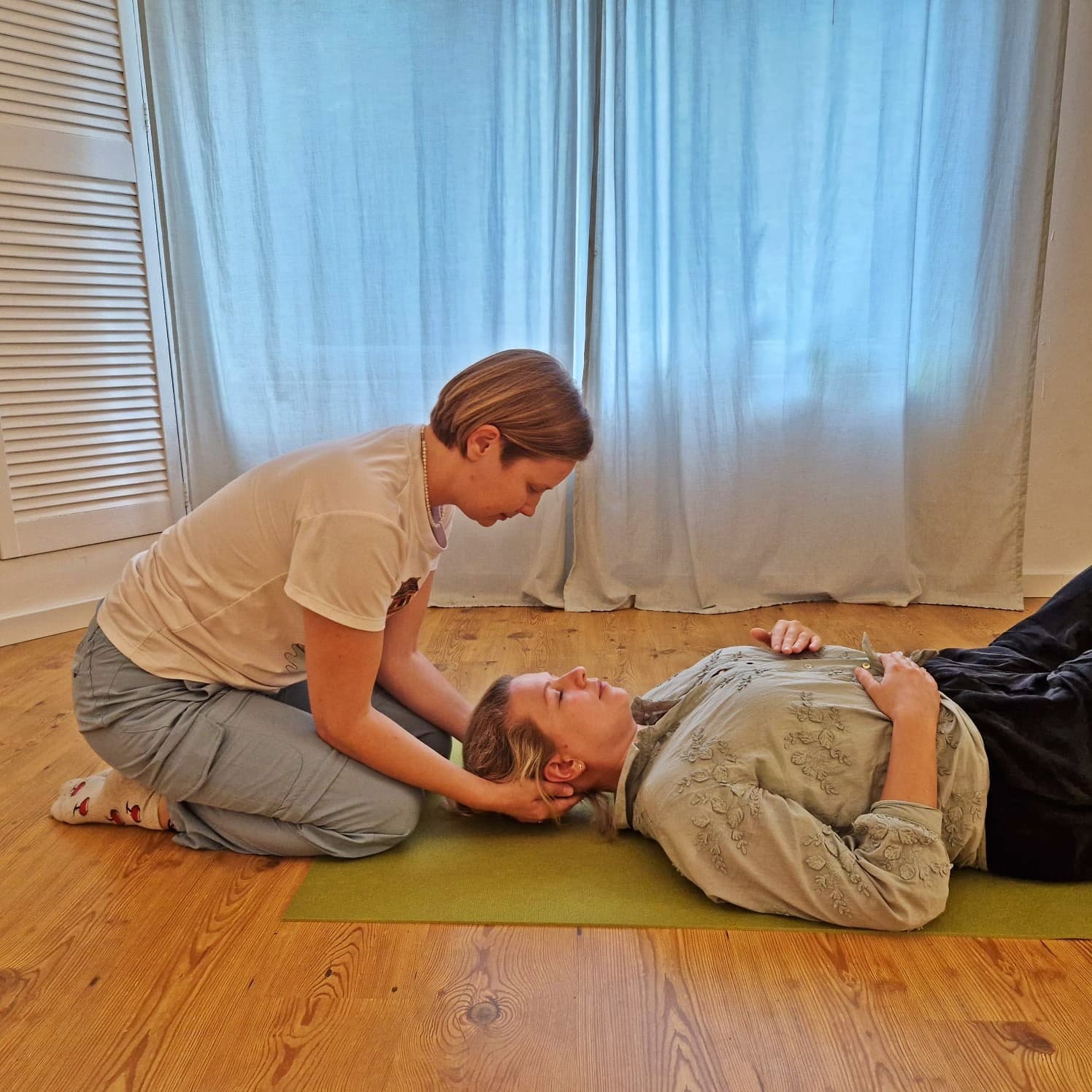
Many people practise TRE™ on their own at home once they know how. The seven TRE™ exercises can look simple when you read about them or watch a video. Learning them with a provider gives you more than that.
You learn the exercises properly. You understand what is happening in your body, including the after-effects and how to work with them. You learn grounding techniques. And there is co-regulation: a nervous system settles more easily when someone calm is with you.
Being watched also helps in a practical way. On your own, it’s easier to dissociate, to disconnect from your body and what you feel. It’s also easier to miss the moment you become activated, when your nervous system shifts into a stress response, without knowing what’s happening.
Many of the people who come to me first watched TRE™ videos on YouTube and tried it alone. Some felt a bit unsure about what was happening in their body, and that’s what brought them to a session. I think it’s one of the best ways to start.
That guidance works online too. Sessions happen live on Zoom, so you can learn in your own room, on your own floor. More on that in Does TRE™ work online?
If you have a question about your own health
Every body comes with its own history. If yours includes something this article doesn’t cover, a private TRE™ session starts with exactly that conversation. We talk first. The shaking only begins once you feel ready.
Frequently Asked Questions
For most people, yes, once they know how to slow down and stop the shaking. That’s one of the reasons many people learn with a provider first: you learn how to start the shaking, how to stop it, and how to ground yourself. Short sessions of about 15 minutes are the usual start.
Sometimes people feel a little agitated or anxious after shaking, especially when a session runs long. A short break and a slower pace usually help. If the feeling is strong or lasts, a provider can help you adjust the practice. If you live with an anxiety disorder, it helps to talk with your provider before you start.
As a general rule, no. TRE™ isn’t practised during pregnancy until there is more research. Some providers with deep experience do work with pregnant clients, so it’s individual. Talk with a provider about your situation before you start.
It can be, when the condition is stable and the pace is slow. TRE™ says PTSD calls for a provider with experience in it. So it helps to tell your provider about the diagnosis before you start, so the work fits you and your other care.
Often it’s deep relaxation. The body has let go of tension it was holding, and rest can follow. Others feel more energy instead. Both are common.
About 15 minutes of shaking, two or three times a week, is a common starting point.
A gentle note
This article is for understanding, not diagnosis. If you have a health condition, it’s worth speaking with your doctor or a qualified practitioner who can look at your situation directly.
We talk first
A private session starts with your questions
If you’re unsure whether TRE™ fits your body and your history, we can look at it together, online, in English or Ukrainian. The shaking only begins once you feel ready.