
Ho’oponopono and TRE®: A Simple Practice for What Comes Up
Ho’oponopono is a Hawaiian practice built on four short phrases: I’m sorry, please forgive me, I love you, thank you. Alongside TRE®, it gives the feelings that sometimes surface during the body’s release a simple way to be met — without analysis, without a story. It asks for no belief, and it works in any language.
When the Body Lets Go, Feelings Sometimes Follow
TRE® works with the body, not with memories. The tremors complete stress reactions that were frozen long ago — moments when it wasn’t safe or possible to react fully, so the body held on instead.
As that old holding releases, a feeling sometimes comes with it. Sadness with no clear reason. An old memory surfacing during the exercises, or a day later. This isn’t a sign that something went wrong. It’s more like the body finishing a sentence it started years ago.
Most of the time, these waves pass on their own. And sometimes it helps to have something simple to hold onto while they pass. That’s where Ho’oponopono comes in.
What Ho’oponopono Is
Ho’oponopono is a Hawaiian word that roughly means “to set right.” Traditionally it was a family reconciliation practice, guided by an elder. The short four-phrase form most people know today comes from a modern lineage: the Hawaiian healer Morrnah Simeona shaped it, and Dr. Ihaleakala Hew Len carried it into the world. I want to be honest about that: it’s not an ancient ritual copied straight from old Hawaii. It’s a living practice with a known history.
The essence of Ho’oponopono is about clearing and letting go — releasing the old patterns, memories, and pain that we’ve been carrying, and coming back to ourselves. When emotions and memories surface (as they naturally do during TRE®), this practice helps us acknowledge them, take responsibility for our inner experience, and then gently release what no longer serves us. It’s a way of cleaning our internal state so we can return to a place of peace and clarity within ourselves.
The whole practice is the four phrases. That’s it. No preparation, no teacher required.
The Four Phrases
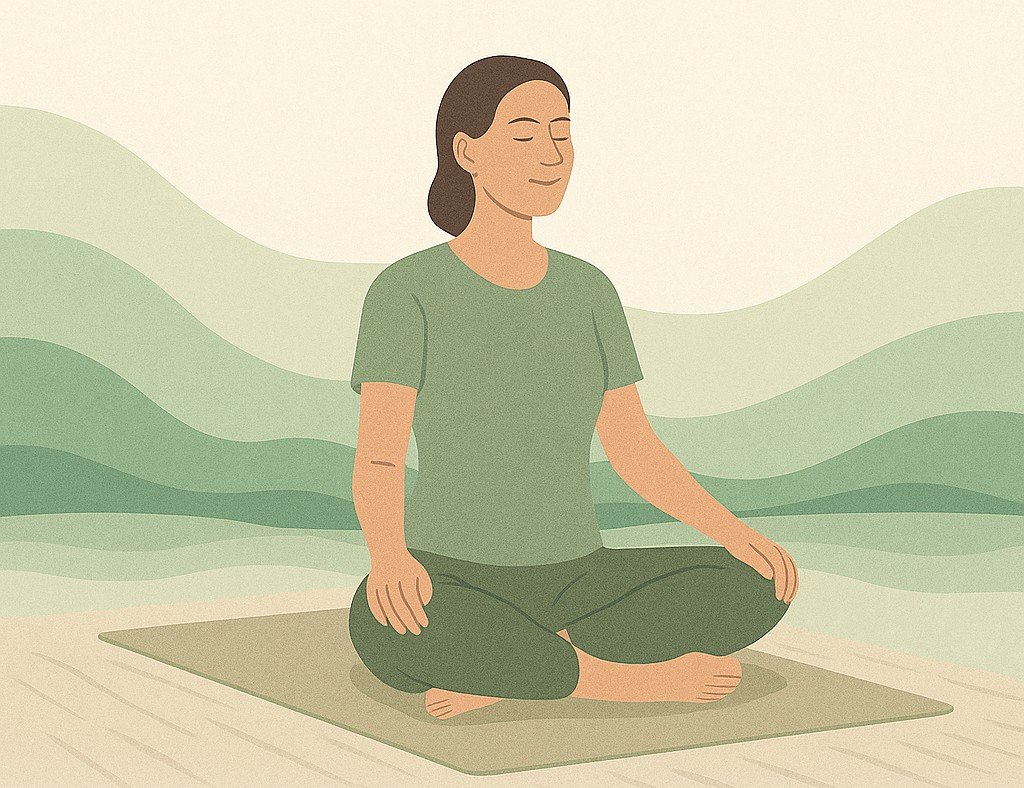
The practice is to repeat them — aloud or silently, in whatever way feels natural. The intentions behind the phrases:
I’m sorry
I acknowledge this pain, this pattern, this experience that’s been held within me.
Please forgive me
I release any judgment toward myself for carrying this, for being in this experience. I let go of holding onto it.
I love you
I offer compassion and love to myself, to my inner child, to the part of me that has been hurting. I come back to myself with kindness.
Thank you
I’m grateful for this awareness, for the opportunity to release and heal, for coming back home to myself.
The intentions matter more than the exact wording. Said in any other language, the phrases do the same work.
Why It Can Reach What Talking Doesn’t
One of my clients had spent years in talk therapy. Different methods, different therapists. He understood his story very well — and at some point, understanding stopped helping. He described it as a wall.
We started working with TRE®, and his body began releasing what it had been holding. Feelings started to surface. And here was the interesting part: talking about them pulled him straight back into analysis. His mind was too well trained.
So I suggested the four phrases. And they worked, I think, precisely because there was nothing in them for his mind to work with. No concept to examine, no story to retell. Just four short phrases, repeated.
The defenses that had met every therapy head-on suddenly had nothing to push against.
I’m not saying this replaces therapy. It’s a different door. Talking works through understanding; this works through — honestly, I’m not sure I can fully explain what it works through. I just keep seeing that it does.
A Tool With Nothing Attached
This is what I appreciate most about Ho’oponopono, and why I suggest it alongside TRE®.
Most techniques come with a framework: a psychological model to accept, a vocabulary to learn. The framework isn’t bad. But it gives the mind material — something to agree or disagree with, to do correctly or incorrectly, to project onto.
Ho’oponopono has almost none of that. Four phrases in plain words that exist in every language on earth. You can’t really argue with “thank you.”
TRE® has the same quality. Dr. David Berceli built it on a reflex every human body shares — no concept required there either. Maybe that’s why they fit together so well: both work below the level where the mind usually takes over.
How People Combine It With TRE®
There’s no method to get right here. Only ways people use it:
- Some repeat the phrases quietly during the rest phase after tremoring, when the body is settled and open.
- Some use them in meditation, five minutes or so, separate from their TRE® practice.
- Aloud or silently, slowly or quickly — whatever comes naturally tends to work best.
- If a specific feeling or memory has surfaced, the phrases can be directed toward it. If nothing specific is there, they can simply be repeated into the quiet.
It often feels a bit mechanical at first, even silly. That’s normal, and it’s not an obstacle. The less the mind is involved, the better this seems to work.
Frequently Asked Questions
No. The phrases direct attention toward what you’re feeling, with kindness instead of judgment. That works whether or not you hold any belief about why.
Yes. The meaning carries the practice, not the sound. English or any other language — the effect is the same.
No. Many people keep the traditional order because it’s easy to remember. Others stay with the one phrase that feels closest. Both work.
That’s common, especially at first. Some people notice a shift after days or weeks of short practice; some notice quiet rather than feeling. Nothing is going wrong.
It has roots in Hawaiian culture and spirituality, but the four-phrase practice asks for no religious belief or membership. People of any background — or none — use it.
More questions about TRE® itself are answered in 27 common questions about TRE®.
If you try it
Tell me how it goes
If you experiment with the phrases for a week or two — after your TRE® practice, or in meditation — I’d honestly love to hear how it went. I read everything, and your experience helps me understand how these tools land for different people.
And if what surfaces feels like more than you want to sit with alone, that’s what private sessions are for. Not because anything is wrong; some things are simply easier to meet with company.